Starship Flight 14 Aims for First Orbital Flight and Six Earth Orbits
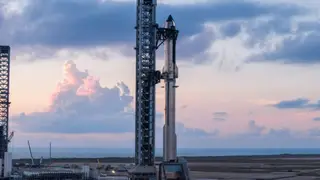
SpaceX's Starship is set for its 14th integrated test flight today from Starbase, Texas, within a 75-minute window opening at 7:15 a.m. CDT. The upper stage, Ship 41, is intended to reach about 275 km, perform six orbits, and splash down in the Pacific west of Chile after the Super Heavy booster separates. Astronomer Scott Manley shared an approximate ground track suggesting the vehicle could be visible over Hawaii and other locations.
Flight 14 is SpaceX’s 14th combined Starship test and its third such attempt in 2026. Ship 41 is meant to climb to roughly 275 kilometers, complete six circuits, then re-enter and land in the Pacific west of Chile. Super Heavy will separate early and target a controlled ocean landing in the Gulf of America.
The mission also plans to release 26 Starlink V3 satellites. Three are expected to image the upper stage’s heat shield, while the satellites will later use their own thrusters to adjust orbit. A deorbit burn is scheduled about eight hours and 52 minutes after launch, with splashdown near nine hours and 50 minutes.
A successful Flight 14 could advance SpaceX’s orbital testing goals and expand Starlink capacity, potentially benefiting users in areas relying on satellite internet. Skywatchers in overflight regions may get rare viewing chances, while astronomers could face more satellites in orbit. The mission’s outcome may influence confidence in Starship for future payload and exploration work.