What a Modern Yellowstone Supereruption Could Mean for the World
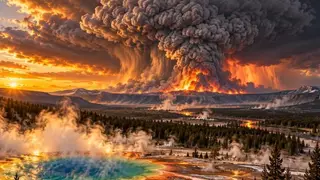
A worst-case Yellowstone supereruption would bury nearby regions in ash and disrupt systems across North America. The global consequences could include food shortages, economic disruption, migration, and years of volcanic cooling. The article is a thought experiment by disaster and volcano experts based on past events and recent disaster responses.
About 631,000 years ago, enormous eruptions took place in what is now northwestern Wyoming. Ash reached large parts of North America, and consequences were global. No known people observed it, as human groups had not yet settled that landmass.
Today, Yellowstone is monitored with seismometers, GPS, strainmeters, geyser sensors, satellites, gas sampling, and field surveys. Experts watch earthquake swarms, particularly ones that shift location or become shallower, since these may indicate rising magma or hot fluids. The caldera measures roughly 55–70 kilometers across.
If such an eruption occurred, communities near Yellowstone could face ash burial and disrupted infrastructure, while North American systems may strain. Global food supplies, economies, migration patterns, and health services could also be affected, with volcanic cooling possibly lasting years. The greatest societal burden might fall on vulnerable populations and regions least able to adapt. These outcomes remain hypothetical, based on expert thought experiments and past disasters, not predictions.