Occupational health attracts private equity as investors seek resilient employer-funded services
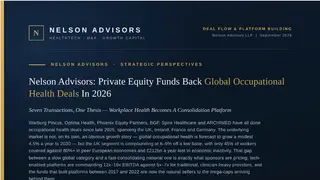
Private equity investors are increasingly targeting occupational health providers worldwide, drawn by employer-funded demand and regulatory requirements. The report describes consolidation of clinic networks, mobile screening services, ergonomics consultancies, and compliance software, especially in North America and Western Europe. It attributes the trend to OSHA-type mandates, workplace injury costs, and pressure on public health systems.
Private equity interest in occupational health rests on employer-funded demand tied to safety rules. In the U.S., OSHA standards require respirator evaluations, hearing tests, and medical monitoring for hazards such as lead, arsenic, chromium, and silica, plus injury recordkeeping.
In Britain and Europe, employers must provide ongoing medical monitoring, ergonomic checks, and psychosocial risk oversight under HSE and EU framework rules. UK sickness absence averages 4.4 days yearly, while chronic illness-related inactivity is estimated at £212 billion, with NHS backlogs pushing firms toward employer-funded services.
Consolidation could affect workers through changed access to screenings and clinic networks, while employers may see streamlined compliance and cost control. Public health systems may face shifting demand if occupational services move further into private, employer-funded channels. Investors may gain resilient revenue, but workers in fragmented or low-wage sectors could face uneven access if coverage depends on employer contracts.