NASA Researchers Study Ancient Scottish Rocks to Decode Mars' Habitability History
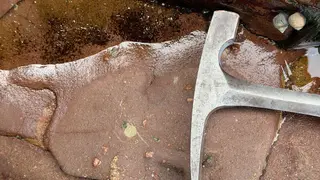
NASA scientists conducted fieldwork in Scotland's Stoer formation to study 1.2-billion-year-old rocks that formed in environments resembling ancient Martian lakes and rivers, providing insights into how microbial life evidence appears in geological records. By examining these Scottish rock formations and identifying biosignatures, researchers can better interpret data collected by NASA rovers on Mars and understand what signs of ancient life might be detectable on the Red Planet. The expedition involved hauling instruments across coastal cliffs and tidal zones to collect samples and conduct in-situ mineral and chemical analyses.
NASA scientists traveled to Scotland's Stoer formation to examine ancient rock formations that offer rare Earth-based analogs for conditions thought to exist on early Mars. The 1.2-billion-year-old rocks preserve chemical and mineral signatures from microbial ecosystems that existed in aquatic environments—lakes and river systems—before complex life emerged on Earth. This geological record provides a terrestrial reference point for interpreting data gathered by NASA's Perseverance rover, particularly puzzling features like reduction spots discovered in Mars' Jezero Crater that may indicate past microbial activity.
The fieldwork required careful coordination with Scotland's extreme tidal fluctuations, with water levels varying by 11 to 15 feet. Researchers used portable instruments to analyze mineral composition directly at collection sites, then transported samples to laboratories equipped with advanced analytical tools for detailed chemical analysis. This multi-phase approach combines field observation with laboratory investigation to develop better methods for detecting and interpreting potential biosignatures in Martian geology.
This research could enhance our capacity to detect signs of ancient life on Mars, which may influence the scientific priorities and methodologies of future planetary missions. Success in identifying reliable biosignature indicators from Earth analogs could guide mission planners in sample collection and analysis strategies. Additionally, improved understanding of how microbial life signatures persist in geological records may inform broader discussions about the prevalence of life in the universe and Earth's own deep history—topics with relevance to astrobiology education and long-term space exploration strategy.