Atelier Luna's Modular Camping House Features Foldable Design and Integrated Renewable Energy Systems
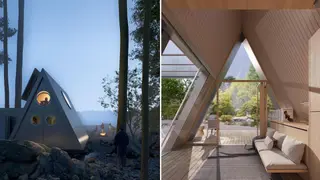
Atelier Luna's award-winning Camping House is a transportable micro dwelling that unfolds into an A-frame shelter with integrated off-grid features including roof-mounted solar panels, rainwater harvesting systems, and passive solar ventilation. The structure uses recyclable aluminum framing, bio-based insulation, and a reversible peg anchoring system that leaves minimal environmental impact while accommodating seasonal migration or disaster relief applications. The modular design includes three interchangeable ports that can be customized for sleeping, working, or kitchen functions depending on user needs.
The Camping House demonstrates how micro-dwelling innovation addresses multiple contemporary challenges simultaneously. Its reversible anchoring system and recyclable materials represent a deliberate approach to temporary habitation that prioritizes environmental restoration—the structure can be deployed and removed without lasting ecological disruption. This design philosophy extends to its operational systems, where passive ventilation and integrated water collection reduce dependency on external infrastructure.
The modular port configuration addresses the versatility gap in portable housing. Rather than offering a single fixed layout, users can reconfigure interior spaces to match their immediate needs—whether establishing a remote workspace, accommodating guests, or optimizing storage. This adaptability separates the design from conventional mobile shelters, which typically lock users into predetermined room arrangements.
The Camping House could influence how organizations approach emergency shelter deployment and sustainable tourism infrastructure. Its rapid assembly capability and off-grid systems may interest disaster response agencies and climate-vulnerable communities seeking dignified temporary solutions. Simultaneously, the design might shape expectations around remote work accommodations and seasonal living, potentially affecting real estate and hospitality sectors. However, adoption would depend on manufacturing scalability, cost competitiveness, and regulatory acceptance of non-traditional housing structures in various jurisdictions.