Kyiv Journalists Navigate Escalating Drone Strikes as Daily Reality
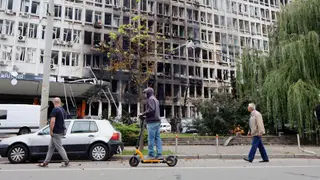
A Kyiv Independent reporter describes how Russian drone attacks have intensified since August, now occurring throughout the day rather than limited to nighttime hours, fundamentally reshaping civilian routines and work operations in the Ukrainian capital. Modern jet-powered Shahed drones prove more difficult to intercept than earlier variants, forcing residents and journalists to adjust their daily activities around continuous air raid alerts. The article illustrates how Ukrainians have adapted psychologically to persistent military threats while maintaining essential work and community functions.
The intensification of Russian drone attacks on Kyiv marks a significant tactical shift in the conflict. Beginning in August 2026, the introduction of faster, jet-powered Shahed variants expanded the temporal scope of strikes beyond their previous nighttime concentration, creating unpredictable threats throughout daylight and evening hours. This advancement in drone technology has outpaced existing air defense capabilities, forcing civilians and essential workers to recalibrate their daily schedules and safety protocols around continuous threat alerts.
The Ukrainian capital has adapted institutional frameworks to accommodate persistent military danger. Authorities implemented a tiered alert system that permits certain civilian operations, including coffee shops, to function during specific threat levels while restricting service methods. This approach attempts to balance operational continuity with public safety, reflecting a broader societal adjustment to prolonged conflict conditions.
The normalization of drone strikes throughout Kyiv's civilian areas may have profound psychological and operational consequences for residents and critical workers. Journalists, medical personnel, and other essential service providers face compounded stress from balancing professional duties with personal security. Extended exposure to chronic threat conditions could affect both workplace productivity and long-term mental health outcomes, while potentially altering how information about conflict reaches international audiences if reporting becomes increasingly difficult to conduct safely.