Ancient Chinese Fossil Reveals Earlier Marsupial Ancestry Than Previously Known
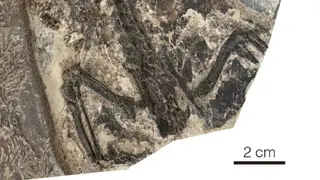
Paleontologists discovered Archetheridium sinense, a 120-million-year-old mammal from northeastern China that represents the oldest confirmed ancestor of marsupials yet found. The fossil, preserved in the Jehol Biota formation, indicates that the divergence between marsupials and placental mammals occurred earlier and in Asia than previous evidence suggested. This deltatheroidian species fills a significant geographic and temporal gap in the evolutionary record of these carnivorous mammals.
The Jehol Biota formation in northeastern China has long been recognized as a treasure trove of exceptionally well-preserved Mesozoic fossils. Archetheridium sinense, discovered in the Jiufotang Formation of Liaoning province, stands out because it includes rare skeletal material beyond the fragmentary teeth and jaw pieces that typically comprise early metatherian records. This more complete specimen allows researchers to better understand the dental adaptations and body structure of these early carnivorous mammals.
The discovery challenges the geographic assumptions embedded in earlier paleontological understanding. Previously, the oldest known deltatheroidans came from Oklahoma deposits dated to roughly 113-100 million years ago. The Chinese specimen's age of 120 million years, combined with better-preserved fossils from later Asian deposits, suggests that marsupial lineages diversified and spread from Asia rather than from North America as some researchers had previously theorized.
This finding may influence how evolutionary biologists and paleontologists reconstruct mammalian family trees and migration patterns during the Cretaceous period. Museums and academic institutions could redirect research priorities toward Asian fossil sites. The discovery could also reshape textbook narratives about mammalian origins, potentially affecting how the deep evolutionary history of living marsupials in Australia and the Americas is explained to students and the public. However, broader societal impact remains limited to scientific and educational communities.