Gut Bacterium's Sugar Compound Shows Promise for Reducing Abdominal Fat in Mice
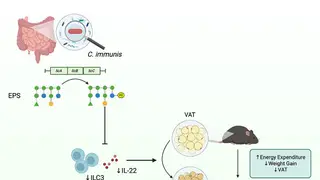
Researchers at Duke University discovered that Clostridium immunis, a human gut bacterium, secretes an exopolysaccharide molecule that reduces visceral fat by roughly one-third in mice within a week and inhibits weight gain on high-fat diets. The fat-reducing effect specifically requires a phosphocholine chemical tag on the sugar molecule, a modification normally associated with disease-causing bacteria. The finding suggests this bacterial compound could potentially be developed into a therapeutic approach for treating obesity and related metabolic disorders.
The research builds on earlier work by the same Duke team showing that Clostridium immunis offers protection against intestinal inflammation. During this investigation into the bacterium's protective mechanisms, the scientists observed unexpected metabolic benefits in treated animals. The compound's effectiveness hinges on a single chemical modification—phosphocholine—which paradoxically mimics a feature used by disease-causing organisms to hide from immune recognition.
Supporting their findings, the researchers examined microbiome data across thousands of human subjects and identified that individuals with obesity or elevated triglycerides carried fewer genes responsible for producing this phosphocholine marker compared to metabolically healthy controls, suggesting potential relevance to human disease patterns.
If successfully developed into a therapeutic, this bacterial compound could offer a novel treatment avenue for obesity and related metabolic complications affecting billions globally. Such a microbiome-based approach might appeal to patients who have limited options or poor outcomes with existing interventions. However, the researchers acknowledge significant unknowns about long-term effectiveness and the full scope of immune mechanisms involved, meaning substantial further work would precede any clinical applications for treating human obesity.