Ancient Photograph Revives Debate Over Female Ruler in Early Egyptian Dynasty
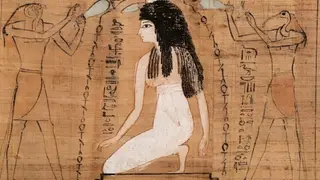
Scholars are reassessing the historical status of Meretneith, a prominent figure from ancient Egypt's First Dynasty more than five millennia ago, using documentary evidence from a decades-old photograph of a mud stopper artifact. A newly published study presented in Prague Egyptological Studies argues that Meretneith held independent ruling authority rather than merely serving as a regent or administrator. This reevaluation challenges previous scholarly interpretations and highlights how archival materials can illuminate gaps in archaeological understanding.
Meretneith occupied a significant position during Egypt's First Dynasty, a period spanning thousands of years before the Common Era. Recent scholarly work has prompted researchers to reconsider her role in early Egyptian governance, moving away from interpretations that positioned her primarily in administrative or regent capacities toward recognition of her as an independent ruler. The reassessment draws on archival photography of an artifact—a mud stopper—that had been documented decades earlier but is now receiving renewed analytical attention.
This case illustrates how archaeological understanding evolves through careful reexamination of existing materials. The publication of findings in specialized Egyptological journals represents the ongoing scholarly conversation about Egypt's earliest dynasties and the roles individuals held in that distant period.
This reevaluation could influence how historians and educators present early Egyptian political structures and women's leadership roles in ancient societies. Museum institutions and academic curricula may incorporate revised interpretations into their presentations. The study may also encourage other researchers to reinvestigate archival collections and older documentation for overlooked evidence, potentially affecting broader approaches to archaeological research methodology and historical interpretation.