U.S. Stock Indexes Fall Amid Geopolitical Tensions and Rising Bond Yields
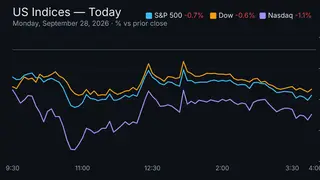
Major U.S. equity indexes declined on Monday as geopolitical concerns and surging Treasury yields dampened investor appetite for risk, with the Nasdaq falling 0.92% and the S&P 500 dropping 0.77%. The 10-year Treasury yield climbed to a 20-year high of 5.25%, strengthening the dollar and pressuring safe-haven assets like gold while raising market expectations for a Federal Reserve rate hike. Energy stocks advanced on crude oil gains following geopolitical developments, while capital-intensive sectors including aerospace and industrial equipment manufacturers faced headwinds from the higher rate environment.
Monday's market pullback reflected two concurrent pressures weighing on investor sentiment. The 10-year Treasury yield reached its highest point in two decades at 5.25%, signaling expectations that the Federal Reserve will raise rates by a quarter percentage point in October—a development that typically harms growth-oriented sectors and companies with substantial debt obligations. Geopolitical developments in the Middle East simultaneously boosted crude prices while triggering broader risk-off positioning across equities.
The divergent sector performance underscored how rising rates create winners and losers. Energy benefited from higher oil prices, while defensive consumer stocks attracted capital seeking stability. However, capital-intensive industries reliant on favorable borrowing conditions—particularly aerospace and industrial equipment manufacturers—experienced notable declines. Technology stocks led the retreat, though individual names like Nvidia diverged from sector trends on company-specific developments.
Equity market movements of this magnitude affect millions of individuals with retirement savings, pension funds, and investment portfolios. Rising Treasury yields may increase borrowing costs for businesses and consumers, potentially slowing economic activity and job creation. Conversely, higher yields benefit savers and fixed-income investors. Geopolitical uncertainty could influence energy prices with ripple effects across transportation and manufacturing sectors, affecting employment and consumer purchasing power in ways that may persist beyond immediate market adjustments.