Military Space Assets and Orbital Defense Capabilities Enter New Phase
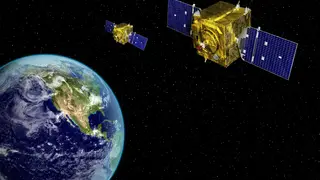
The U.S. military's announcement about placing weapons systems in space confirms what experts had long suspected, as space has increasingly become a contested domain for national security. Military reliance on orbital assets for surveillance, navigation, and communications spans over fifty years, with the U.S. particularly dependent on these systems for its operations. The move reflects growing international concerns about defending space infrastructure and represents an acknowledgment of existing classified military satellite activities that are already tracked by ground observers.
The U.S. military has long depended on space-based infrastructure for critical operations including surveillance, positioning, and data transmission—a reliance that has grown over more than fifty years. This dependency creates vulnerability, as rival powers develop their own orbital capabilities. Space weapons fall into several categories: those using nuclear explosives (prohibited by international treaty), directed-energy systems, kinetic antisatellite weapons that destroy targets through impact, and platforms designed to disable or interfere with satellite functions without destruction. The most practical approach involves maneuvering spacecraft close enough to adversarial satellites to gather intelligence or potentially disable them through proximity operations.
The formalization of U.S. space weapons capabilities may reshape international security dynamics. Nations heavily reliant on satellite systems for military operations and civilian infrastructure—communications, navigation, weather forecasting—could face increased vulnerability to orbital conflict. The public acknowledgment may escalate tensions with competitors possessing undeclared space weapons while potentially encouraging other nations to develop similar capabilities. Civilians could experience indirect effects through disrupted GPS services, communications failures, or orbital debris from destroyed satellites. However, transparency might also establish new norms around space conduct, potentially reducing the risk of uncontrolled escalation.