Injectable Implants Establish Bioelectric Communication Network Within Living Tissue
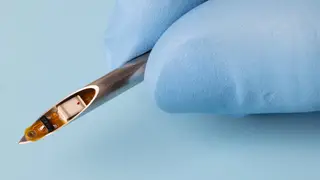
Researchers have demonstrated a Smart Wireless Autonomous Networking System (SWANS) consisting of microscopic implants that communicate through the body's tissue using electrical pulses rather than wireless signals like Bluetooth. In rat experiments, the system successfully transmitted signals between implants in different body locations, triggering coordinated muscle responses without direct nerve involvement. This innovation could enable distributed medical devices throughout the body while minimizing power requirements and tissue disruption compared to conventional wireless implants.
The SWANS system leverages a fundamental property of human physiology: tissue's natural ability to conduct electrical current. Rather than relying on conventional wireless protocols that demand substantial power supplies, the implants communicate through low-voltage pulses that traverse the body's conductive environment. This approach addresses a critical limitation in current medical device design, where distributed sensors monitoring different anatomical regions often require either cumbersome batteries or complex external communication infrastructure.
The proof-of-concept demonstrated coordinated function between distant body locations without involving the nervous system directly. The implants' minimal power consumption—potentially enabling year-long operation from a single charge with daily activation—could enable new possibilities for continuous health monitoring and therapeutic intervention in previously inaccessible locations like deep muscle or organ tissue, where space constraints have historically prevented device placement.
If successfully translated to human medicine, SWANS could reshape implantable medical device design by enabling smaller, longer-lasting systems throughout the body. This may expand treatment options for conditions requiring distributed sensing or intervention, such as chronic pain management or metabolic disorders. However, the technology's clinical viability remains uncertain; human trials would need to establish safety, efficacy, and whether tissue conductivity properties operate similarly across diverse body compositions and conditions before widespread adoption becomes feasible.