Yellow-morph sea turtles in Galápagos remain confined to local waters unlike typical ocean voyagers
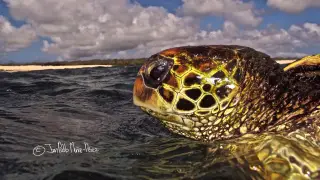
A three-year satellite tracking study revealed that yellow-morph green sea turtles in the Galápagos Islands remain resident within the marine reserve rather than undertaking the long ocean migrations characteristic of most sea turtle species. Researchers tracked multiple individuals using satellite technology and found that none departed the reserve boundaries, suggesting the islands' coastal habitats are critical to this population's survival. The discovery highlights an unusual behavioral pattern among this genetically distinct form of green sea turtle.
This three-year investigation tracked nine adult yellow-morph green sea turtles across the Galápagos Marine Reserve using satellite technology. The study participants, including seven males and two females, were monitored for up to 418 days as they moved through shallow coastal zones. While most individuals established territories near single islands, a few demonstrated greater mobility, traveling between multiple landmasses within the reserve system.
The discovery is particularly significant because it contradicts established understanding of sea turtle behavior. Most species undertake extensive transoceanic migrations spanning thousands of kilometers to breeding grounds. The yellow morph's apparent territoriality suggests this genetically distinct population has adapted differently, relying on local marine vegetation resources within the Galápagos ecosystem rather than pursuing the migratory patterns typical of their relatives elsewhere.
These findings could influence conservation strategies for both Galápagos sea turtle populations and broader marine reserve management. If yellow morphs depend heavily on localized coastal habitats, protection efforts may need stronger focus on maintaining water quality and vegetation health within specific island zones rather than assuming ocean-wide management. The research may also inform how scientists approach conservation of other island-based marine species with unusual behavioral adaptations, potentially reshaping resource allocation decisions for environmental agencies managing sensitive ecosystems.