Aave Token Rallies on Founder's Token Burn Proposal
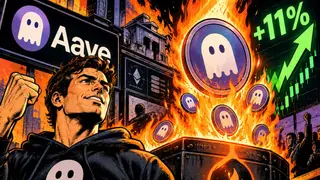
Aave's native token surged 11% following founder Stani Kulechov's announcement of a potential token burn mechanism in the planned Aavenomics 3.0 update. The cryptocurrency gains occurred despite elevated US Treasury yields and broader market weakness, with the DeFi sector showing unexpected strength. The burn proposal represents a strategy to reduce token supply and potentially enhance token value.
Aave's token rally stands out as an anomaly in an otherwise challenging market environment. With US Treasury yields reaching levels unseen since the mid-2000s and equities declining, most digital assets faced headwinds. However, the DeFi sector demonstrated unexpected resilience, with multiple tokens including Curve and Uniswap posting significant gains alongside Aave. This divergence suggests investors viewed the announcement as particularly meaningful within the decentralized finance space.
The proposed token burn mechanism remains conceptual rather than finalized. While founder Stani Kulechov indicated consideration of such a measure within Aavenomics 3.0, no specific timeline, volume, or implementation details have been disclosed. The protocol currently conducts token buybacks, with acquired tokens held in treasury reserves. A formal burn would represent a more permanent supply reduction, fundamentally altering the token's long-term economics.
Token burn proposals may influence investment behavior by signaling supply constraints and potential value appreciation to holders. For DeFi protocol participants and token investors, such mechanisms could affect portfolio valuations and platform incentives. However, the gap between announcement and implementation creates uncertainty—actual market impact depends on whether the proposal advances to concrete execution. Broader implications for cryptocurrency adoption and regulatory treatment remain subject to how decentralized protocols balance tokenomics with sustainable governance practices.