Active Black Holes Shown to Trigger Star Birth Rather Than Always Suppress It
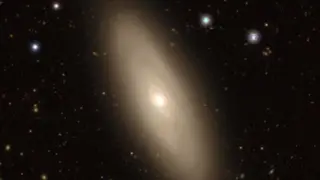
Observations from the Very Large Telescope reveal that supermassive black holes in nine nearby Seyfert galaxies appear to stimulate rather than inhibit star formation in their surroundings. The study found that outflows from actively accreting black holes interact with neighboring gas clouds to create shock fronts and energized regions where stars can form. This work suggests that black hole accretion and ejection processes play a dynamic role in galaxy evolution beyond their previously understood role in quenching star birth.
Previous astronomical models suggested that active black holes primarily suppressed star formation by consuming gas that would otherwise fuel new stars. This research challenges that understanding by demonstrating that the outflow processes accompanying black hole accretion can be constructive. The team identified star-forming regions positioned relatively close to galactic centers—within distances of roughly 2,600 to 20,000 light-years—where shock fronts generated by black hole jets compress nearby gas clouds.
The observations relied on combining high-resolution telescope data with X-ray confirmations and computational modeling to distinguish between three distinct phenomena: newly forming stars, radiation directly from the black hole, and shock-driven excitation. The findings suggest black hole activity involves a reciprocal cycle of material intake and ejection, with both processes shaping galactic structure and potentially influencing how galaxies mature over cosmic time.
These findings could reshape astrophysical models predicting how galaxies evolve and regulate their growth over billions of years. Understanding black hole feedback mechanisms may help scientists better interpret observations of distant, early-universe galaxies and refine simulations used in cosmology research. For the broader public, this work demonstrates that astronomical phenomena previously viewed as destructive may operate within more nuanced, dynamic systems—shifting perspective on fundamental processes shaping the universe's large-scale structure.