Xi's White House Summit Yields No Major Agreements
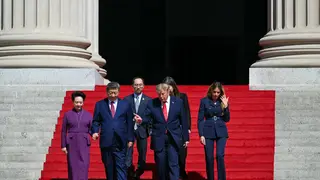
Chinese President Xi Jinping departed Washington after a summit with President Trump that produced minimal substantive results, generating little enthusiasm even from Trump-friendly media outlets. The meeting concluded with only praise from Trump regarding both the Chinese leader and himself, with Chinese state media providing routine coverage that quickly faded from headlines. Analysts suggest that in the current U.S.-China relationship, achieving nothing may be preferable to reaching problematic agreements.
The summit between Trump and Xi produced minimal concrete outcomes beyond mutual praise and a $60 billion tariff reduction agreement. Chinese state media provided standard coverage that quickly disappeared from news cycles, while even pro-Trump outlets showed limited enthusiasm for the results. The most notable incident involved the U.S. ambassador's claim that Trump offered to sell arms to China—a proposal that would violate U.S. law and alarm allied nations—though the White House denied the statement despite Trump's ambiguous response.
The meeting reflects current U.S.-China dynamics where both powers appear reluctant to escalate tensions over trade or geopolitical flashpoints like Taiwan. Rather than negotiate contentious issues, both sides opted to avoid sensitive topics entirely. Notably, trade negotiators from each country have reportedly developed functional working relationships, providing a modest foundation for ongoing diplomatic engagement despite the summit's lack of major breakthroughs.
This diplomatic stalemate could affect multiple constituencies differently. U.S. allies may find reassurance in continued stability rather than unpredictable confrontation, yet concern that unresolved tensions remain unaddressed. American businesses might welcome tariff reductions but face continued uncertainty in U.S.-China economic relations. Within the Trump administration, foreign policy hawks advocating for stronger positions against China may experience disappointment with the president's apparent lack of appetite for escalation. Broader geopolitical stability in the Indo-Pacific region could benefit from maintained diplomatic channels, though underlying strategic competition persists unresolved.