AMD Acquires Spatial AI Researcher to Expand Beyond Semiconductor Manufacturing
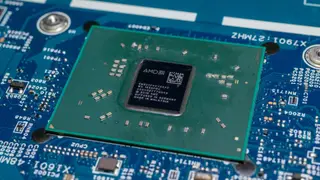
Advanced Micro Devices is acquiring World Labs, an artificial intelligence research company, for approximately $8.2 billion in an all-stock transaction expected to close by year-end, adding spatial-intelligence research capabilities to its portfolio. World Labs founder Fei-Fei Li will join AMD as executive vice president and chief scientist, bringing expertise in three-dimensional environment simulation and robotic learning systems used in physical artificial intelligence applications. The acquisition represents AMD's strategic expansion from chip manufacturing into the development of foundational models that will power robotics and autonomous systems in the coming years.
AMD's acquisition of World Labs represents a significant shift in how the chipmaker approaches artificial intelligence competition. Rather than acquiring another hardware manufacturer or established AI software company, AMD is investing $8.2 billion specifically to internalize research capabilities in spatial intelligence—a branch of AI focused on three-dimensional environment understanding and simulation. This mirrors a broader industry trend where hardware companies recognize that designing optimal processors requires intimate knowledge of the algorithms and workloads those chips will run.
The appointment of Fei-Fei Li as chief scientist directly reporting to CEO Lisa Su underscores how much AMD values model research expertise. With her background in computer vision and previous role at Google Cloud, Li brings credibility in AI development alongside the World Labs team's demonstrated progress on products like Marble, which creates interactive 3D simulated environments for robotic training.
This acquisition could accelerate development of robotics and autonomous systems by embedding AI model research within hardware design cycles. Companies and industries relying on emerging robotics may benefit from tighter integration between software innovation and computing infrastructure. However, the all-stock transaction structure raises questions about financial discipline and shareholder dilution. Broader implications include potential talent consolidation in AI research, potentially limiting diversity of independent research directions in physical AI development.