Army Distributes $7 Billion in Counter-Drone Contracts Across 10 Defense Contractors
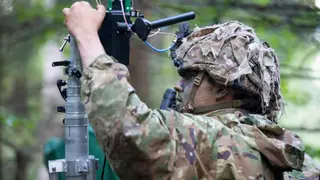
The Army announced the award of up to $7 billion in indefinite delivery contracts to ten companies for counter-unmanned aircraft capabilities including sensors, effectors, and command-and-control systems. The contracts support both the Pentagon's counter-drone marketplace and the Domestic Shield program aimed at protecting military installations and critical infrastructure from small drone threats. Individual contract values range from $150 million to $500 million across companies including DroneShield, L3Harris WESCAM, and SRC.
The Army structured these awards as indefinite delivery contracts, a contracting mechanism that allows the military flexibility to order varying quantities of equipment as operational needs emerge without being locked into predetermined volumes. The ten selected firms will supply an integrated range of counter-drone capabilities spanning detection systems, neutralization tools, and operational command infrastructure—reflecting Pentagon strategy to maintain competition among vendors rather than consolidating around single suppliers as drone threats continue evolving.
Joint Interagency Task Force 401, which oversees counter-drone initiatives, aims to construct a comprehensive defensive architecture capable of executing the full spectrum of responses to unauthorized aircraft: initial detection, continuous tracking, positive identification, threat mitigation, and physical capture. Army leadership emphasized that this layered approach better positions the Pentagon to adapt as adversaries develop increasingly sophisticated unmanned systems.
The $7 billion investment signals growing concern about drone vulnerabilities at military installations and civilian infrastructure, potentially accelerating development cycles for counter-technology across the defense industrial base. The awards may reshape market dynamics for smaller specialized firms like DroneShield and SmartShooter alongside established contractors, affecting employment and regional economic development. Domestically, the program's emphasis on protecting critical infrastructure could influence how civilian agencies approach drone threats, though implementation timelines and real-world effectiveness remain uncertain variables affecting actual security outcomes.