Supercapacitors Emerge as Supplementary Solution for Managing AI Workload Power Fluctuations
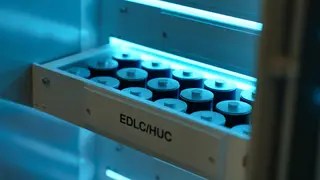
Supercapacitor technology offers rapid-response capabilities measured in milliseconds to handle sudden power demand shifts created by AI processing workloads. However, industry experts expect supercapacitors will function as complements to existing battery and uninterruptible power supply systems rather than replacements. The technology addresses a specific gap in power management infrastructure by bridging response times between conventional energy storage systems and real-time grid demands.
The rapid expansion of artificial intelligence workloads in data center environments has created unprecedented strain on conventional power management systems. Traditional batteries and uninterruptible power supplies operate on different response timescales than the millisecond-level fluctuations inherent in modern AI processing, leaving a critical gap in infrastructure resilience. Supercapacitors, with their ability to charge and discharge almost instantaneously, are positioned to fill this specific niche without fundamentally restructuring existing power architectures.
Industry assessments suggest this represents an incremental infrastructure advancement rather than a transformative shift. By functioning as an intermediary layer within multi-tiered power systems, supercapacitors would enhance overall grid stability during the volatile demand cycles created by AI model training and inference operations, while allowing established battery and backup systems to continue serving their intended roles in longer-duration outage scenarios.
Supercapacitor adoption could meaningfully affect data center operators, cloud infrastructure providers, and their customers by improving service reliability during peak computational periods. Such technology may reduce instances of power-related downtime or performance degradation affecting AI applications. However, widespread implementation would depend on cost-effectiveness relative to competing solutions and integration feasibility with existing installations, factors that remain uncertain at scale.