Declining Federal Air Monitoring Infrastructure Prompts Industry Push Against Community-Based Pollution Data
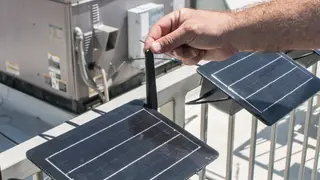
The federal air quality monitoring network has contracted significantly due to reduced funding, leaving many communities unable to detect dangerous pollution levels at a time when wildfire smoke, data centers, and heat-driven ozone are increasing air quality threats. Communities have increasingly relied on low-cost sensors to monitor air quality themselves, but since 2024, legislators in Louisiana, Ohio, and Kentucky have passed industry-backed bills that prevent regulators from using community-collected data for enforcement purposes. Environmental advocates worry these restrictions eliminate an important tool for detecting pollution as gaps in the official monitoring system continue to expand.
The federal air quality monitoring system has deteriorated significantly due to decades of funding cuts and equipment failures. Adjusted for inflation, federal support has dropped more than one-third over twenty years, and the number of monitoring stations has been halved. Equipment maintenance has become increasingly difficult, with some facilities experiencing structural damage and officials forced to source replacement parts from secondhand markets. The decline has been most severe for monitors tracking toxic chemicals known to cause serious health conditions, with networks for vinyl chloride, benzene, and chloroprene all shrinking by more than half since the early 2000s.
These legislative restrictions could significantly impact public health protection by preventing regulators from accessing supplementary pollution data during a period of expanding environmental threats. Communities living near industrial facilities or in areas affected by wildfires may face reduced early warning of hazardous air conditions. If enforcement actions depend solely on gaps-ridden federal monitoring data, polluters could operate with reduced accountability. Conversely, some stakeholders argue accuracy standards protect against unfounded enforcement claims, creating a tension between regulatory responsiveness and data reliability that could reshape how environmental violations are detected and addressed.