Kentucky Farmer Becomes First in U.S. to Complete Autonomous Planting Season
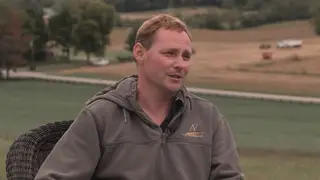
Quint Pottinger, an eighth-generation Kentucky farmer, used a retrofitted driverless tractor named Geneva to autonomously plant his entire 2,000 acres of row crops during the 2026 season, making him the first U.S. farmer to accomplish this without external company support or research programs. Facing financial pressures from three consecutive drought years, Pottinger adopted the autonomous technology as a cost-cutting measure after exhausting other options. His first autonomously planted crop is now being harvested and is showing promising yields of 200 to 250 bushels per acre despite weather challenges including floods and replanting requirements.
Pottinger's journey to autonomous farming began when financial constraints from consecutive years of drought forced increasingly difficult decisions. After systematically reducing expenses across fertilizer, staffing, and equipment investments, the farm faced a critical juncture. A conversation with his lender revealed that older machinery was not the primary cost burden, redirecting Pottinger's focus toward operational innovation rather than further asset reduction.
The inaugural harvest results have exceeded regional benchmarks significantly. While the area typically produces 150-170 bushels per acre, Pottinger's autonomous-planted fields are yielding 200-250 bushels despite substantial weather complications including multiple replanting cycles caused by flooding and heavy precipitation. This performance occurs at a vital moment, as the previous three years of drought-reduced yields between 100-130 bushels per acre, straining the farm's financial viability.
This achievement may signal potential pathways for family farms facing economic pressure, as it demonstrates autonomous technology's viability at smaller operational scales without corporate infrastructure support. The approach could influence agricultural equipment adoption patterns and farm economics, particularly for operations unable to absorb large capital expenditures. However, broader implications remain uncertain—factors like technology cost, maintenance requirements, regulatory frameworks, and scalability across different farm types and regions will likely determine whether this model represents a sustainable solution or a specialized case applicable only to specific circumstances.