India and U.S. Emerge as Solar Manufacturing Powerhouses While China Maintains Dominance
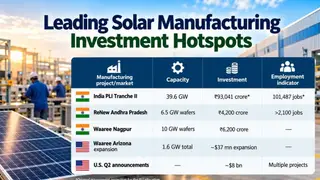
Global solar manufacturing employment reached 7.2 million jobs in 2024, with China accounting for 58 percent of positions despite rising competition from India and the United States. India has rapidly expanded module and cell manufacturing capacity to 261.7 GW and 36.6 GW respectively during 2026, with government incentive programs expected to create over 100,000 direct jobs. The U.S. is developing highly automated manufacturing hubs as supply chains localize across the solar value chain.
India's solar manufacturing sector is undergoing significant vertical integration, moving beyond simple module assembly into more complex upstream production. Companies like ReNew and Waaree are investing billions in wafer and cell manufacturing facilities, which require specialized technical workforces including process engineers and equipment maintenance specialists. These expansions represent a shift toward capturing greater value within India's borders and reducing dependence on imported components.
The U.S. approach differs markedly, emphasizing automation and localized supply chains rather than labor-intensive assembly. Meanwhile, China's dominance remains substantial at 58 percent of global solar employment, though its market share faces erosion as Western nations pursue supply-chain independence and domestic manufacturing capacity expands across geographies.
Accelerating solar manufacturing across India and the United States could reshape global employment patterns and energy supply resilience, potentially benefiting workers in these regions through skilled manufacturing jobs. However, increased manufacturing localization may concentrate production in capital-intensive facilities with limited employment relative to investment, particularly in automated U.S. operations. Communities hosting these facilities could see economic development, though benefits may depend on workforce training accessibility and wage competitiveness relative to existing solar installation and service employment.