AI Chatbots Threaten to Disrupt Online Travel Agencies' Market Dominance, Says Hilton CIO
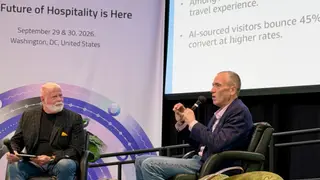
Hilton's chief information officer believes large language models and AI assistants are undermining online travel agencies' competitive advantage by providing travelers with the same aggregated search capabilities previously exclusive to OTAs. He suggests AI disruption could drive more bookings directly to hotel platforms despite AI tools likely charging their own commissions.
Hilton's technology leadership has identified a fundamental shift in how travelers plan trips. Previously, online travel agencies maintained market power by serving as centralized platforms where consumers could compare prices and availability across numerous fragmented hotel properties. Large language models now replicate this aggregation function, allowing travelers to input their preferences and receive complete itineraries without relying on OTA intermediaries. This capability reportedly extends to both established platforms like ChatGPT and emerging agentic AI systems designed for autonomous decision-making.
The hotel industry sees potential advantage despite acknowledging that AI assistants will likely impose their own fees. Hilton anticipates that direct bookings through its own digital properties—website and mobile app—could increase as travelers bypass traditional OTA channels, potentially improving profit margins by reducing commission payouts to third-party platforms.
This development could reshape travel booking economics across multiple stakeholder groups. Consumers may benefit from faster comparison shopping and personalized recommendations, though they should weigh whether AI-directed bookings offer genuine savings or simply shift commissions to different intermediaries. Hotels and hospitality chains might capture greater revenue per booking, while OTAs could face margin compression. Travel agents and booking platforms dependent on OTA distribution networks may experience competitive pressure requiring business model adaptation.