New Killifish Species Discovered in Critically Threatened Amazon Wetlands
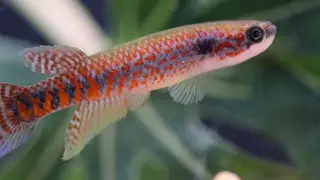
Researchers identified a brightly colored freshwater killifish species named Laimosemion laranja in the Brazilian Amazon, found only in three disturbed forest pools in Amapá state. The small fish, measuring less than three centimeters, displays distinctive orange markings and belongs to a group of annual killifishes that can survive seasonal droughts by pausing development as embryos in dormant mud. The discovery highlights both the region's biodiversity and the urgent need for habitat protection in threatened Amazon forest ecosystems.
The killifish family Rivulidae exhibits a remarkable survival strategy in which certain lineages have independently evolved the ability to enter diapause—a state of suspended embryonic development. This adaptation allows populations to endure extended dry seasons by remaining dormant within mud substrates until water returns. Laimosemion laranja represents one of five such evolutionary origins of this annual lifecycle strategy, making its discovery scientifically significant for understanding how similar ecological pressures shape convergent evolution across different fish groups.
The specimen's restricted range within three small pools in Amapá state underscores a critical vulnerability common to many endemic freshwater species. These isolated aquatic habitats face compounding threats from resource extraction, landscape conversion, and urban infrastructure development. The proximity of known populations to mining operations and urban centers suggests that habitat degradation poses an immediate conservation challenge requiring urgent documentation and protection measures.
The discovery may influence regional conservation priorities by drawing scientific attention to Amapá's freshwater ecosystems and their undocumented biodiversity. Identifying endemic species in threatened areas could strengthen arguments for habitat preservation among policymakers and may incentivize research funding for tropical freshwater biology. However, the fish's extremely limited distribution suggests that even designation as protected could face practical enforcement challenges in regions experiencing economic pressure from mining and development interests.