Computer Science Program Secures Funding to Expand Beyond California Pilot
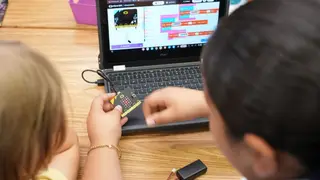
A year-long computer science initiative in Los Angeles County schools demonstrated significant improvements in teacher confidence and student engagement, with 95 percent of participating educators reporting increased confidence in teaching coding. Google.org has committed an additional $520,000 to expand the Micro:bit Educational Foundation program to schools across 49 states and U.S. territories during the 2026-27 school year, building on the success of a pilot that reached over 3,100 students and 154 teachers. The program uses programmable micro:bit devices to introduce hands-on coding activities tied to real-world problem-solving.
The micro:bit device is a pocket-sized programmable computer that has achieved widespread global adoption, with usage spanning more than 85 countries and reaching tens of millions of young people. In the Los Angeles pilot, students applied the technology to address practical challenges, including infrastructure improvements and environmental monitoring. The program demonstrated particular effectiveness in under-resourced schools, with 90 percent of participating institutions serving economically disadvantaged populations.
Google.org's incremental funding strategy—first supporting a contained regional test before committing to national scale—reflects how philanthropic technology initiatives often validate their approaches before broader deployment. The independent evaluation by a university research center provided third-party verification of the reported outcomes, lending credibility to claims about teacher preparation and student outcomes across the participating schools.
The expansion could influence computer science access across economically diverse school districts, potentially narrowing gaps in STEM preparation. Teachers' reported gains in confidence and instructional resources may translate to more consistent coding instruction quality nationwide. However, sustainability depends on whether schools maintain momentum after initial funding concludes and whether similar outcomes materialize outside California's context. The program's success with Title I schools may also signal viable models for technology integration in resource-constrained educational settings.