North Shore homeowners struggle with sewage contamination weeks after Hurricane Lowell
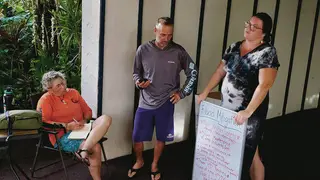
Residents of Kauai's North Shore, including Lindsey Friedberg and Ricky Ewing, continue dealing with sewage-contaminated water in their properties more than a week following Hurricane Lowell's flooding in early September. The couple organized a community meeting on September 17 to address the ongoing sewage problem affecting multiple households. Property owners remain actively pumping contaminated water from their yards as cleanup efforts extend beyond two weeks.
Hurricane Lowell struck Kauai's North Shore in early September 2026, triggering widespread flooding that exposed a persistent infrastructure vulnerability in the Haena area. The region's reliance on cesspool systems—the predominant wastewater method for nearly all properties—created a compounding disaster when floodwaters rose above 3 feet, mixing sewage with stormwater and contaminating residential properties. Residents faced weeks of cleanup operations, with concerns about leptospirosis and other waterborne pathogens present in the standing water.
The financial barrier to upgrading wastewater infrastructure compounds the problem. Switching from cesspools to alternative systems costs between $20,000 and $50,000 per household—a prohibitive expense for most homeowners. Combined with unmanaged mauka land that channels additional debris and animal waste downslope during storms, the neighborhood's drainage and sanitation challenges appear structural rather than temporary.
This situation highlights how aging infrastructure and limited retrofit resources can amplify natural disaster impacts on residential communities. Residents in flood-prone areas relying on individual cesspool systems may face disproportionate public health risks when sewage systems fail during storms. The gap between necessary infrastructure upgrades and household finances could necessitate county or state intervention to prevent recurring contamination cycles, raising questions about emergency response protocols and long-term community resilience planning.