Health center slashes electricity spending by more than half through comprehensive energy retrofit
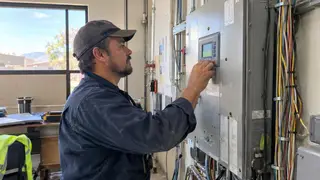
Albuquerque's Dede Feldman Los Griegos Health & Social Services Center reduced its annual electric bill from over $44,000 to $20,118 after replacing failed HVAC equipment with a comprehensive building improvement program. The retrofit included installation of a building automation system, envelope sealing, solar panel repairs and submetering to monitor energy performance. The facility now generates surplus power to return to the grid during spring and summer months.
The retrofit addressed multiple building systems simultaneously rather than replacing equipment in isolation. Beyond the HVAC replacement, the project included thermal envelope improvements identified through infrared scanning, LED lighting upgrades with motion sensors, and restoration of a previously non-functional solar array through inverter replacement. A building automation system now manages equipment scheduling and startup sequences to optimize efficiency.
The city installed independent metering infrastructure to track energy consumption, solar output, and grid performance in real time. This measurement capability provides verification of the claimed savings and allows facility operators to monitor ongoing performance. The project demonstrates how emergency equipment failures can serve as opportunities to implement broader efficiency improvements across aging healthcare facilities.
Healthcare facilities represent significant energy consumers, and this retrofit model may be replicable across other aging public health infrastructure. By combining mechanical upgrades with controls, insulation, and renewable energy restoration, municipalities and health systems could potentially reduce operational costs while lowering carbon emissions. However, the actual energy savings distribution among individual measures remains unclear, which may limit guidance for facilities prioritizing which improvements offer the greatest return on investment.