Hawaii's Coastal Property Owners Build Barriers as Rising Seas Threaten Shorelines
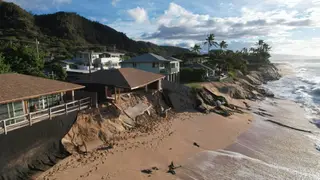
Nearly three-quarters of O'ahu's North Shore beaches experience chronic erosion, with 73% currently affected and projections suggesting this could reach 90% within three decades as sea levels rise by about 10 inches. Property owners are installing temporary structures like sandbag-filled barriers to protect multi-million-dollar beachfront homes, but these hard defenses actually prevent beaches from moving naturally inland where they can survive rising water. Scientists warn that without removing these barriers and allowing coastal migration, Hawaii's beaches will be trapped and effectively drowned as sea levels continue to climb.
Hawaii has responded to accelerating coastal threats with pioneering legislation aimed at reversing the practice of private shoreline fortification. Beginning in 2020, the state prohibited new coastal armoring installations and subsequently required sellers to disclose erosion risks and existing barriers to buyers. Enforcement escalated in 2023 with penalties targeting expired and unauthorized protective structures.
The fundamental challenge lies in a natural coastal process: as ocean levels rise, beaches shift landward to maintain their existence. Physical barriers trap beaches between rising water and fixed property lines, causing accelerated sand loss rather than preservation. Scientists emphasize that allowing this inland migration represents the only viable long-term strategy for maintaining Hawaii's beaches as sea levels continue climbing.
This situation affects multiple stakeholders with competing interests. Property owners face potential economic losses on valuable real estate, while public access to beaches diminishes as they narrow or disappear entirely. Communities lose recreational and cultural resources, and taxpayers may eventually bear costs of larger-scale interventions. The conflict raises questions about sustainability planning, climate adaptation priorities, and balancing individual property rights against collective environmental and public welfare concerns in vulnerable coastal regions.