Soil Moisture Sensors Help Washington Farm Cut Water Use by Two-Thirds
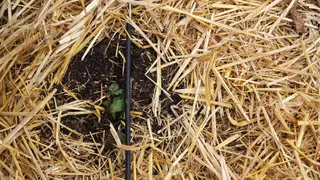
A Washington State farm installed underground soil moisture sensors to determine precisely when crops needed watering, allowing them to adapt to increasingly erratic precipitation patterns caused by climate change. The technology reduced their watering frequency from approximately four times weekly to just three times across the entire growing season, resulting in substantial water savings while maintaining crop health. This approach demonstrates how farmers can build climate resilience by replacing guesswork with data-driven irrigation management as weather becomes less predictable.
The Pacific Northwest's precipitation patterns are shifting in ways that complicate agricultural planning. Rather than the region's traditional gentle winter rainfall distributed across months, weather is becoming increasingly volatile—characterized by intense storms followed by extended dry periods. Summer conditions are simultaneously becoming hotter and drier, compressing the growing season and making manual watering decisions unreliable.
Outback Farm's two-year experiment with underground soil moisture sensors addressed this unpredictability by replacing intuition with direct measurement. The technology eliminated guesswork about rainfall penetration depth and soil water availability, enabling farmers to water only when crops actually needed it. This precision reduced irrigation frequency dramatically while maintaining yields, demonstrating a scalable adaptation strategy for farms facing climate volatility.
As precipitation becomes less predictable across agricultural regions, adoption of soil moisture monitoring could help farms reduce water consumption during drought periods while protecting productivity. This approach may be particularly valuable in water-stressed areas where irrigation accounts for significant resource use. Wider implementation could support food security while conserving freshwater supplies, though success may depend on sensor affordability, technical support access, and whether farms can integrate data systems into existing operations.