Student Engineering Team Develops Remarkably Efficient Heavy-Lift Aerial Vehicle
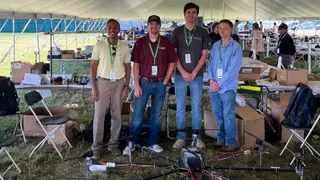
Aerospace engineering students at Texas A&M University have designed and constructed a drone weighing approximately 50 pounds capable of lifting over twice its own mass. The achievement demonstrates innovative engineering solutions and was developed as part of a competitive challenge.
Aerospace engineering students at Texas A&M University have completed construction of an unmanned aerial system demonstrating exceptional payload capacity relative to its structural weight. The vehicle, which tips the scales at roughly 50 pounds, has been engineered to transport loads exceeding 100 pounds—more than double its own mass. This project emerged from participation in a competitive engineering challenge, suggesting the work meets rigorous performance standards established by the competition's organizers.
The accomplishment highlights contemporary advances in lightweight materials, aerodynamic design, and propulsion systems that enable small teams to push the boundaries of aerial vehicle performance. Student-led projects of this caliber typically integrate principles from multiple engineering disciplines to optimize efficiency.
Heavy-lift drone technology could have meaningful applications across industries including infrastructure inspection, emergency response, and logistics operations where weight-carrying capacity remains constrained. Advances in this field may drive incremental improvements in commercial unmanned systems, potentially affecting sectors from agriculture to construction. However, the real-world deployment of such vehicles depends on regulatory approval, battery technology maturation, and cost-effectiveness relative to existing alternatives.