Revolutionary Single-Step Steel Production Process Dramatically Reduces Industrial Emissions
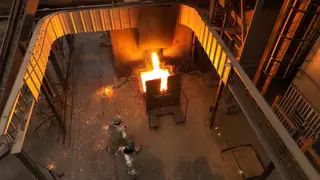
Hertha Metals plans to construct a facility in the United States capable of producing 10,000 tons of steel and high-purity iron using an innovative single-step process. The new technology achieves up to 98 percent reduction in carbon emissions compared to conventional steel manufacturing methods.
Hertha Metals is advancing a novel manufacturing approach that consolidates steel production into a single operation, markedly departing from traditional multi-stage methods. The facility planned for the U.S. market will have an initial capacity of 10,000 tons annually and will simultaneously produce both steel and high-purity iron, suggesting the process may yield multiple valuable materials from a unified workflow.
The emissions reduction potential represents a significant environmental advantage. Steel manufacturing traditionally ranks among the most carbon-intensive industrial sectors globally, so a technology achieving near-total emissions cuts could reshape competitive dynamics within the industry if the process proves economically viable at commercial scale.
This development could affect steel-dependent sectors ranging from automotive to construction by potentially lowering the carbon footprint of their supply chains. Industrial manufacturers may face pressure to adopt cleaner methods, while investors and policymakers could view this as progress toward decarbonization goals. Economic viability and production costs remain critical unknowns; widespread adoption would depend on whether the efficiency gains translate to competitive pricing without requiring substantial subsidies or market restructuring.