Chainlink's Explosive Rally Outpaces Solana Despite Inferior Institutional Accessibility
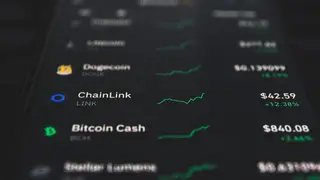
Chainlink surged 96 percent in the past quarter, significantly outperforming Solana's 67 percent gain and becoming one of the few cryptocurrencies with positive year-to-date returns. Solana maintains a substantial institutional advantage with nearly $2 billion in exchange-traded fund assets compared to Chainlink's $72 million, making it more accessible for retirement portfolios despite weaker recent momentum. Both tokens remain more than 60 percent below their historical peaks, requiring substantial appreciation to recover to previous valuations.
Chainlink's oracle network serves a specific infrastructure function within blockchain ecosystems, facilitating the connection between external data sources and on-chain smart contracts. The recent price momentum appears driven primarily by market sentiment and trader activity rather than fundamental changes in adoption or utility. Meanwhile, Solana's substantially larger market capitalization and liquidity provide structural advantages for institutional participation and reduce price volatility during large transactions.
The ETF accessibility gap between these two assets creates a meaningful divide in potential investor bases. Solana's nearly two-billion-dollar exchange-traded fund market enables retirement account holders and conservative investors to gain exposure through traditional brokerage platforms, whereas Chainlink's seventy-two-million-dollar ETF market significantly limits institutional participation through mainstream financial channels.
This comparison may influence retail investor allocation decisions, potentially directing capital toward either momentum-driven opportunities or institutional-grade accessibility. Individuals saving for retirement could face material differences in portfolio options depending on their brokerage platform's cryptocurrency offerings. The divergence between price performance and institutional infrastructure availability may also signal broader questions about market maturity, as investors must weigh recent gains against long-term accessibility and stability within traditional financial systems.