Geomagnetic Storm to Bring Northern Lights Display to Northern U.S. States This Week
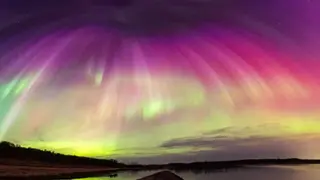
A coronal mass ejection from the Sun originating on September 28 is expected to reach Earth on October 2, creating a minor geomagnetic storm that will expand aurora visibility southward from their typical polar locations. States including Maine and Michigan are predicted to experience visible auroras, with the phenomenon most prominent around midnight despite peak geomagnetic activity occurring during daylight hours. The incoming solar plasma may cause minor fluctuations in power grids and disturbances to satellite operations.
Solar eruptions periodically send waves of charged particles toward Earth, a phenomenon scientists monitor closely through space weather forecasting. When these particles interact with Earth's magnetic field, they energize atmospheric gases in polar regions, producing the colorful light displays known as auroras. The intensity of geomagnetic activity determines how far south from the Arctic this phenomenon becomes visible; stronger storms push aurora visibility deeper into populated areas where they're rarely seen.
The timing of this particular event benefits from seasonal factors. The autumn equinox, which occurred in late September, creates atmospheric conditions that naturally enhance aurora visibility. Researchers have identified March and October as peak months for aurora occurrence, suggesting that the combination of incoming solar activity and seasonal positioning creates optimal conditions for northern U.S. residents to witness this celestial event.
This aurora forecast may engage millions of skywatchers across the northern United States seeking a rare natural phenomenon. Beyond recreational interest, the associated geomagnetic storm could affect infrastructure operators, as power grid managers may need to monitor systems for fluctuations and satellite operators could experience service disruptions. The event underscores how solar activity, though typically distant, can produce measurable effects on technological systems and natural phenomena visible to the public, potentially raising awareness about space weather preparedness among both citizens and utilities.