Four Astronauts Complete Final Preparations for Record-Breaking Journey to Space Station
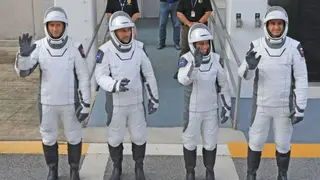
Four crew members have finished their launch dress rehearsal and are set to launch on October 1 aboard a SpaceX Dragon spacecraft, with their journey to the International Space Station taking just 7 hours and 50 minutes—the fastest transit time achieved by a U.S. spacecraft. The Crew-13 mission includes NASA astronauts Jessica Watkins and Luke Delaney, Canadian Space Agency astronaut Joshua Kutryk, and Roscosmos cosmonaut Sergey Teteryatnikov, marking the first spaceflight for three of the four. After arriving at the station, the new crew will collaborate with the outgoing Crew-12 for a handover of operational responsibilities before returning to Earth.
The Crew-13 mission represents a significant milestone in commercial spaceflight operations. The four-person team brings together expertise from three space agencies—NASA, Canada, and Russia—demonstrating the international cooperation that characterizes modern ISS operations. Three of the four crew members are embarking on their first spaceflight, highlighting how the International Space Station continues to serve as a training ground for the next generation of space explorers.
The record-breaking transit time of 7 hours and 50 minutes reflects improvements in SpaceX's Dragon spacecraft and launch procedures. This efficiency gain shortens astronauts' time in the cramped capsule during ascent and reduces overall mission risk. The rapid handover process between Crew-12 and Crew-13 ensures continuous scientific operations aboard the station, maintaining the facility's research productivity and operational continuity.
The successful execution of crew rotation missions could strengthen public confidence in commercial spaceflight capabilities and their role in maintaining space station operations. Faster transit times and demonstrated safety protocols may influence how space agencies and private companies approach future crewed missions. International crew compositions could foster continued diplomatic cooperation in space exploration, while the advancement of launch efficiency may have implications for the economic viability of sustained human spaceflight programs.