Partisan splits dominate state ballot measures referred by legislatures
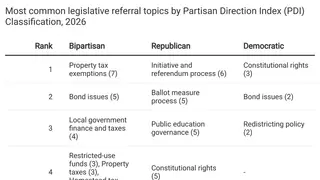
State legislatures referred 109 constitutional amendments and statutes to voters in 2026, with roughly two-thirds showing clear partisan voting patterns in their legislative approval. Republican-leaning measures comprised the largest single category at 38 percent, while bipartisan measures accounted for 37 percent and Democratic-leaning measures represented 16 percent. Property tax exemptions and ballot procedure reforms emerged as the most frequently addressed policy areas across the various measure classifications.
State legislatures are sending a notably polarized set of ballot measures to voters this year. Across 32 states, 109 measures have been referred, with stark differences in how Democrats and Republicans supported them during legislative votes. The Republican-backed measures focus heavily on election procedures and voting requirements, while Democratic-backed measures concentrate on constitutional protections and redistricting questions.
The partisan composition of these referrals has shifted significantly from 2025, when measures were more evenly distributed between bipartisan and lean-Republican categories. This year shows a much stronger presence of solidly partisan Republican measures, reflecting broader legislative dynamics. Early voting returns show Democratic measures passing at higher rates than Republican ones so far.
These ballot measures could shape how elections operate and how state governments function across multiple regions. Voter approval of election-focused Republican measures might restrict voting participation mechanisms, while passage of Democratic constitutional measures could protect specific rights. The split outcomes so far may influence how aggressively either party pushes similar policies in coming years, potentially affecting campaign strategies and legislative priorities heading into 2027 and 2028.