French far-right party's reputation damaged by antisemitism allegations against leader
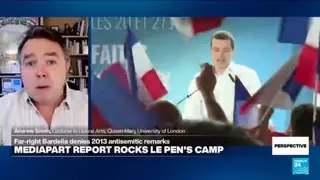
Political analyst Andrew Smith noted that the National Rally has benefited from efforts to rebrand itself as a mainstream party, but recent antisemitism accusations against party president Bardella have seriously undermined this narrative. Investigative outlet Mediapart exposed a series of antisemitic remarks allegedly made by Bardella between 2013 and 2015. The controversy has stalled the party's attempts to distance itself from its extremist historical roots.
The National Rally, France's prominent far-right party, has pursued a systematic strategy to present itself as a credible mainstream political force in recent years. This rebranding effort has apparently resonated with voters and observers alike. However, the emergence of historical antisemitic statements attributed to party president Jordan Bardella has significantly disrupted this narrative. Mediapart's investigation documented remarks spanning from 2013 to 2015, a period before Bardella's rise to his current leadership position.
According to political analysts, the timing and nature of these allegations are particularly damaging because they directly contradict the party's central rehabilitation narrative. The controversy underscores the tension between the organization's historical identity and its efforts to distance itself from extremist associations, potentially complicating its electoral prospects and mainstream political legitimacy.
These allegations could affect multiple constituencies. Voters considering the National Rally may reassess whether the party has genuinely reformed or merely refined its public presentation. Jewish communities in France may view the revelations as evidence that underlying ideologies persist despite cosmetic changes. The incident may also influence other mainstream parties' willingness to collaborate with the National Rally, potentially affecting parliamentary dynamics. Additionally, the controversy could impact international perceptions of French politics and the viability of far-right normalization strategies across Europe.