International damage registry launches to document claims for compensation from Russia's war against Ukraine
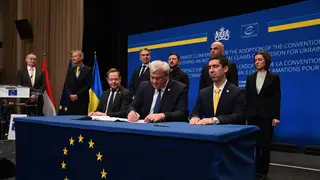
The Register of Damage for Ukraine, established by the Council of Europe, became fully operational on September 30 with the capacity to collect and process compensation claims arising from Russia's invasion. The database contains 43 categories of damage and has already received 195,000 claims that will be reviewed by an International Claims Commission to determine appropriate compensation levels. The central challenge remains securing funding, with the World Bank estimating Ukraine's reconstruction costs at $588 billion and proposals to use frozen Russian assets in Europe, though those funds face competing demands.
The Registry represents an institutional effort to document and quantify losses sustained across Ukraine since Russia's invasion began. Operating through the Diia mobile application, it enables both private citizens and commercial entities to formally register their claims across dozens of damage categories, creating what officials describe as a comprehensive record of the conflict's economic and human toll. The International Claims Commission will evaluate these submissions to determine appropriate compensation amounts.
The financial architecture supporting this system remains uncertain. While European nations have frozen approximately 200 billion euros in Russian state assets, these funds face competing policy priorities and may not be available exclusively for Ukrainian compensation. The World Bank's $588 billion reconstruction estimate substantially exceeds even the total value of frozen assets, highlighting the gap between documented damages and available recovery mechanisms.
This registry could establish a precedent for accountability mechanisms following major conflicts, potentially affecting how future international disputes are resolved and compensated. For Ukraine, it may strengthen legal claims against Russia and provide documentation for individual and national recovery efforts. However, the system's practical effectiveness depends on securing adequate funding and international cooperation—outcomes that remain contingent on evolving political and economic circumstances among Council of Europe member states.