Wall Street Retreats Amid Treasury Yield Surge and Weakening Consumer Confidence
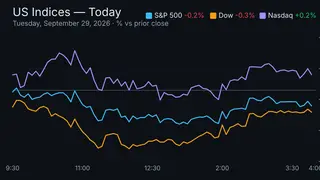
Major U.S. stock indexes declined on September 29 as the 10-year Treasury yield climbed to a 19-year high of 5.26%, with the Dow falling 0.26% and the S&P 500 dropping 0.17%. Consumer confidence hit a 12-year low while job openings contracted significantly, amplifying investor concerns about economic slowdown and elevated borrowing costs. Energy stocks led declines following a 3.97% plunge in crude oil prices, though travel stocks rallied on strong earnings from cruise operators.
Treasury yields hitting their highest point in nearly two decades created headwinds for equities across the board. The simultaneous deterioration in consumer sentiment—dropping to levels unseen since the 2008 financial crisis—signaled growing apprehension about the economic path ahead. Labor market indicators reinforced this pessimism, with companies reporting fewer open positions than in recent years.
Within this challenging backdrop, market participants sought refuge in defensive positions and alternative assets. Gold's gains reflected investor appetite for safety, while certain technology and industrial subsectors managed modest advances. The divergence between struggling traditional sectors like banking and energy versus outperforming areas such as utilities and semiconductors underscored shifting allocation preferences amid uncertainty about inflation and rate trajectory.
Rising borrowing costs and weakening consumer confidence could restrain spending patterns across households and businesses, potentially slowing economic growth. Workers entering a tightening labor market may face reduced job opportunities and wage pressure. Investors with fixed-income exposure could benefit from elevated yields, while those dependent on growth-oriented equities might experience portfolio pressure. The market's mixed performance suggests investors remain divided on whether current conditions signal temporary weakness or more persistent economic challenges ahead.