Regional Shipping and Defense Shifts Shape Indo-Pacific Strategy
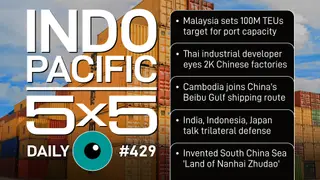
Malaysia is pursuing a major expansion of port capacity to reach 100 million TEUs by 2035 through multiple development projects, with Port Klang maintaining its position as the world's tenth-busiest container port. Thai industrial park developers are capitalizing on a surge in Chinese manufacturing investment, aiming to host 2,000 Chinese-linked factories within the decade as China reshapes regional supply chains. Meanwhile, India, Indonesia, and Japan are deepening trilateral defense cooperation while Cambodia integrates into new shipping routes, signaling shifting geopolitical alignments across the Indo-Pacific.
Malaysia's port expansion initiative reflects the country's strategy to consolidate its position as a major global shipping hub. Port Klang's ranking among the world's top ten container ports, combined with planned capacity increases across multiple facilities including Tanjung Pelepas and regional ports, demonstrates sustained infrastructure investment. Simultaneously, Thailand has emerged as a preferred manufacturing destination, with Chinese investors now driving the majority of new industrial park commitments and achieving operational success rates exceeding 98 percent.
A newly established shipping corridor connecting China's consolidated Beibu Gulf Port system directly to Sihanoukville has dramatically shortened transit times, reducing journey duration by half compared to traditional Guangdong-based routes. This development integrates Cambodia into accelerated supply chain networks while supporting regional port operations processing over 10 million TEUs annually.
These infrastructure and investment shifts could reshape regional trade patterns and supply chain resilience across Southeast Asia. Malaysia and Thailand may strengthen economic positioning through expanded port capacity and manufacturing attraction, while Cambodia's integration into faster shipping corridors could generate port revenues and logistics employment. However, the concentration of Chinese manufacturing investment in Thailand and the strategic importance of these shipping routes may influence geopolitical dynamics, potentially affecting regional trade dependencies and economic leverage among Indo-Pacific nations.