SCOTUSblog Launches Prediction Contest for Supreme Court Case Outcomes
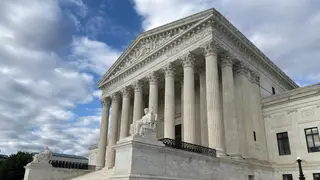
SCOTUSblog has partnered with Good Judgment Inc to allow readers to forecast outcomes of major Supreme Court cases on the free GJ Open platform. Participants can update their predictions until each case is decided, with the top three forecasters announced in July and compared against artificial intelligence models. The initiative enables the public to test their predictive accuracy on the most significant cases of the 2026-27 Supreme Court term.
SCOTUSblog's partnership leverages expertise from Good Judgment Inc, an organization that gained prominence through a 2011 intelligence community competition. That competition tested forecasting methods across geopolitical questions and demonstrated that civilian forecasters using structured methodologies could match or exceed predictions from intelligence professionals with classified information access. The resulting research spawned both an academic book and GJ Open, a free public platform now being applied to judicial prediction.
The contest framework includes comparison against artificial intelligence models, introducing a competitive element that tests whether human judgment or algorithmic analysis better predicts judicial outcomes. Participants can continuously refine predictions as cases progress through oral arguments and deliberation, theoretically allowing forecasters to incorporate evolving information about judicial positions and legal reasoning.
This initiative may increase public engagement with Supreme Court proceedings by transforming speculative interest into structured analytical participation. The competition could enhance understanding of how justices decide cases by requiring forecasters to examine petition language, oral arguments, and prior decisions. However, the broader implications remain uncertain—widespread forecasting contests might normalize predictive confidence about judicial outcomes or potentially influence how stakeholders frame cases, though the platform's educational value for civics literacy appears substantive regardless of competitive results.