US Completes Military Withdrawal from Iraq While Maintaining Focus on Counterterrorism Operations
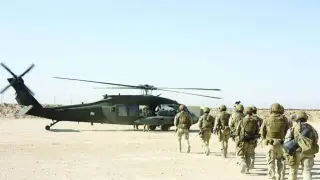
The United States completed its withdrawal from military bases in Iraq on September 30, 2026, fulfilling a 2024 agreement signed under the Biden administration after nearly 25 years of military presence. The Trump administration is shifting responsibility for Iraq's security challenges, including ISIS remnants and Iran-aligned militias, to the Iraqi government, while maintaining the ability to conduct operations from Jordan if circumstances deteriorate. Approximately 1,500 coalition troops were recently stationed in Iraq, with some US Marines remaining to protect American diplomatic missions and contractors supporting Iraq's military equipment.
The US military presence in Iraq has evolved significantly over two decades. Following the initial 2003 invasion that toppled Saddam Hussein, troop levels peaked at roughly 170,000 during the height of sectarian violence in 2007. After President Obama's 2011 withdrawal announcement, the subsequent rise of ISIS in 2014 reversed course, prompting renewed American military engagement through an international coalition focused on counterterrorism operations.
The security environment remains complex beyond the American withdrawal. Iran has substantially expanded its influence through armed groups now estimated at over 200,000 fighters, equipped with advanced weaponry including drones and ballistic missiles. The Iraqi government had sought to disarm these militias but extended their disarmament deadline to mid-2027, leaving this challenge unresolved as the US military departure concludes.
The withdrawal may reshape regional dynamics affecting Iraq's stability, neighboring countries, and US strategic positioning. Iraqi forces must now independently counter ISIS remnants and manage Iranian-backed militias without direct American military support, which could test their capacity. The shift may also influence Iran's regional activities and create space for other powers to extend influence. Americans with diplomatic or commercial interests in Iraq face altered security arrangements, while the broader Middle East balance of power may experience recalibration depending on how Iraq manages emerging challenges.