NASA Selects New Scientific Instruments to Study Moon's Environment for Lunar Outpost
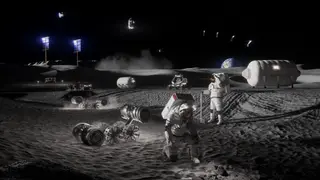
NASA selected three new scientific investigation payloads to be deployed on the lunar surface near the south pole to support the Moon Base program and Artemis missions. The instruments will monitor environmental conditions, detect seismic activity, assess micrometeorite hazards, and identify water and other volatile resources critical for sustained human operations. These science missions aim to provide essential data on lunar resources and safety conditions before astronauts arrive for long-term habitation.
NASA's selection represents a systematic approach to pre-positioning scientific capabilities before human arrival. The three instruments address distinct but interconnected challenges: environmental monitoring at the south pole location will establish baseline conditions for habitation, while subsurface investigation at Marius Hills could identify natural protective structures already present on the lunar surface. The ice-detection payload bridges resource assessment with operational planning, examining both where frozen water deposits exist and how surface conditions will respond to human activity.
These deployments follow a "science first" strategy, gathering essential data through robotic systems to inform subsequent crewed missions. By mapping volatile distributions, confirming underground cavities, and documenting seismic and micrometeorite hazards, NASA can refine construction and safety protocols before astronauts undertake long-duration lunar stays. The instruments collectively create a foundation for distinguishing which lunar locations and resources are genuinely viable for sustained operations.
These missions may significantly reduce risks and costs associated with establishing lunar infrastructure by providing precise resource maps and environmental baselines before human investment. Scientists, engineers, and planners could benefit from detailed subsurface and atmospheric data when designing habitats and extraction systems. Broader public interests may include advancing space exploration capabilities and demonstrating technological feasibility for resource utilization—outcomes that could eventually influence long-term space policy and investment decisions affecting aerospace industries and related sectors.