Ames Impact Crater Redated to Late Devonian Period, Reshaping Understanding of Ancient Extinction Events
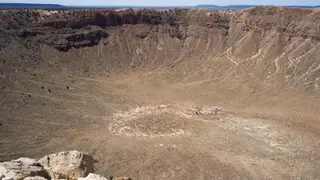
Researchers from the University of Texas at Austin have revised the age of Oklahoma's Ames impact crater from 467 million to approximately 370 million years ago, shifting it from the Middle Ordovician to the Late Devonian period. The previous dating relied on fossilized condont teeth that scientists now believe were already millions of years old when the impact occurred, having been incorporated into impacted rocks rather than dating the collision itself. This correction has significant implications for theories about ancient meteor events and potential ring systems around early Earth.
The Ames crater, buried beneath Oklahoma and measuring roughly 15 kilometers across, had been classified as part of the Ordovician Meteor Event—a period when multiple asteroid impacts struck North America. Scientists originally used fossilized condont remains discovered at the site to establish its age, but this method proved unreliable. The teeth belonged to creatures that died long before the impact and were simply incorporated into the affected rock layers during the collision.
Researchers employed uranium-lead dating on zircon crystals found in the impacted granite to obtain more precise measurements. This radiometric approach revealed the crater formed during the Late Devonian period, aligning it with the Frasnian-Famennian extinction event that devastated marine ecosystems approximately 372 million years ago. The convergence of multiple dating techniques strengthened confidence in these findings.
This redating may influence paleontological theories about mass extinctions and extraterrestrial impacts on Earth's biosphere. Scientists could potentially revise their understanding of whether asteroid collisions triggered the Devonian extinction or merely coincided with it. The research may also prompt geologists to re-examine other ancient impact craters using updated radiometric methods, potentially reshaping the chronology of prehistoric catastrophic events. Such corrections could affect educational curricula and broader scientific models of Earth's evolutionary history.