Tidal Forces From Sun and Moon May Trigger Slow Earthquakes Preceding Major Seismic Events
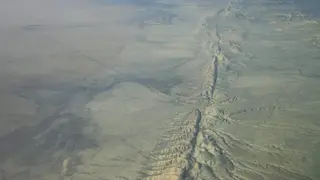
French researchers used computer simulations to demonstrate how gravitational stresses from the Sun and Moon can trigger slow earthquakes on tectonic faults, even though the forces involved are comparable to a gentle hand press. The study found that when tidal stress cycles align with a fault's natural response timescale, the fault becomes significantly more sensitive to triggering, potentially explaining observed patterns where high-magnitude earthquakes occur during periods of elevated tidal stress. The research suggests that timing between celestial gravitational forces and fault conditions is crucial for understanding earthquake initiation.
Researchers at PSL University developed a computational model using a spring-block system to investigate how gravitational forces influence fault behavior. By applying periodic stress waves mimicking celestial gravitational effects, they observed that faults respond dramatically when the frequency of these stresses matches the fault's inherent response characteristics. This resonance phenomenon—comparable to pushing a swing in sync with its natural motion—explains how gravitational forces small enough to equal gentle hand pressure can nonetheless produce significant fault movement.
Prior seismic research established observational links between tidal cycles and earthquake occurrence, particularly finding that major earthquakes tend to cluster during periods of heightened tidal stress. The new study bridges this empirical gap by proposing a physical mechanism: slow earthquakes triggered by tidal forces may serve as precursors to larger seismic events. However, the researchers acknowledge their model represents an oversimplification, as real fault systems involve complex geological variables and interconnected fault networks rather than isolated faults.
This research could inform earthquake hazard assessment by identifying periods when fault systems are more susceptible to triggering. If slow earthquakes genuinely precede major seismic events, monitoring tidal-influenced fault behavior might enable scientists to better forecast large earthquakes' timing and location. However, since tidal stress represents only one of multiple triggering factors and regional geology significantly affects fault sensitivity, practical applications would likely require integration with other seismic monitoring approaches rather than serving as standalone prediction tools.