Canadian Radio Telescope Measures Dark Energy Without External Confirmation
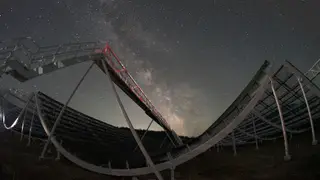
Canada's CHIME telescope has successfully mapped ancient hydrogen gas in the early universe and measured dark energy independently after seven years of research, without requiring confirmation from other telescopes. By detecting the faint radio emissions from hydrogen, the most abundant element in the cosmos, scientists can now trace how matter is distributed across space. This breakthrough could provide a more cost-effective method for studying the mysterious force driving the universe's accelerating expansion.
The CHIME telescope represents a significant advancement in observational astronomy by successfully operating as a standalone measurement tool. Located in British Columbia, this radio array observes the northern sky continuously, detecting hydrogen emissions from billions of years ago. The validation process required extensive scrutiny—researchers analyzed observations from 94 nights in 2019 and conducted rigorous testing to eliminate potential false signals before publishing their findings.
Dark energy remains one of astronomy's greatest mysteries, responsible for the universe's accelerating expansion. CHIME's independent measurement capability could reduce the expense and complexity currently associated with cosmic studies, as scientists previously needed multiple telescopes to verify observations and cross-reference data about the universe's structure and behavior.
This development may significantly impact how scientists conduct future cosmological research by lowering costs associated with dark energy studies. Universities and research institutions with limited budgets could potentially access more robust data about cosmic expansion. The methodology could influence funding allocation in astronomy, allowing resources to extend further. Additionally, improved dark energy measurements might eventually refine models of the universe's fate and composition, though practical applications remain decades away.