Ocean Disturbance from El Niño Expected to Elevate Coastal Water Levels
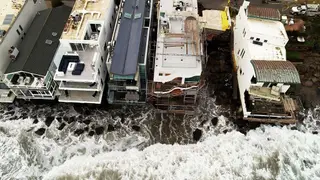
An internal Kelvin wave generated by the year's intense El Niño event is moving northward along the Pacific coast toward California, where it could raise sea levels by approximately one foot for several months. These unusual ocean waves differ from typical Kelvin waves because they cause the boundary between warm surface water and colder deep water to oscillate significantly. Scientists warn the elevated sea levels could compound damage from severe winter storms, storm surges, and coastal erosion expected across Central and North America.
Internal Kelvin waves represent a distinct ocean phenomenon tied to El Niño conditions. Unlike typical Kelvin waves, these disturbances cause the thermocline—the transition zone between warm surface waters and cold deeper layers—to shift vertically across roughly 330 feet of ocean depth while simultaneously raising surface levels. Scientists can monitor their eastward progression along the equator and forecast their arrival at continental coasts with reasonable accuracy.
Upon reaching South America's coastline, the wave splits into two separate coastal trapped waves that travel northward and southward at approximately 6 miles per hour, affecting all eastern Pacific nations and territories. The phenomenon occurs when equatorial wind patterns shift, allowing accumulated warm water from the western Pacific to flow eastward. Researchers emphasize that California and other vulnerable regions will experience extended periods—potentially weeks—where both high and low tides exceed normal elevations.
Coastal communities throughout the eastern Pacific could face compounded hazards if this sea-level elevation coincides with winter storm activity. Elevated baseline water levels may amplify flooding, coastal erosion, and storm surge damage in populated areas dependent on harbors and low-lying infrastructure. Property damage, disrupted transportation networks, and challenges to water management systems represent potential economic and logistical consequences. Vulnerability may vary significantly by region, with some areas better equipped through existing flood defenses than others.