Federal government contracts for temporary detention facility in New York after state restricts jail cooperation
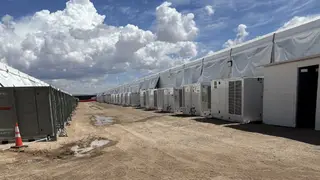
The Department of Homeland Security has awarded a $7.2 million contract to build a tent-style detention facility for women near Buffalo, New York, following the state's implementation of a law prohibiting county jails from housing immigration detainees. The facility will be constructed at the Buffalo Service Processing Center in Batavia as part of an existing contract with infrastructure company Akima. The contracting notice does not specify the facility's capacity, construction timeline, or exact location on the property.
New York's Local Cops, Local Crimes Act, effective since August 2025, prohibits county jails from housing federal immigration detainees, creating capacity challenges for U.S. Immigration and Customs Enforcement in the region. The Batavia facility expansion represents a federal response to this state-level restriction, allowing detention operations to continue without relying on local correctional infrastructure.
Akima Infrastructure Protection, the contractor selected for the project, operates detention facilities across multiple locations including Guantanamo Bay. The company is currently facing litigation related to a detainee death at Camp East Montana in Texas, where another Akima subsidiary previously provided security services. The federal government has increasingly utilized tent-style detention camps as temporary housing solutions.
This development may affect detained immigrants awaiting processing or deportation proceedings, who would be housed in temporary tent facilities rather than permanent structures. New York State policymakers could face questions about whether the outcome—federal construction of alternative detention infrastructure—aligns with their legislative intent to reduce immigration enforcement cooperation. The arrangement may also influence other states considering similar jail-restriction policies, depending on whether federal alternatives prove operationally viable and cost-effective.