AtlasBase Develops DNA Storage Technology Capable of Storing Petabytes for Millennia
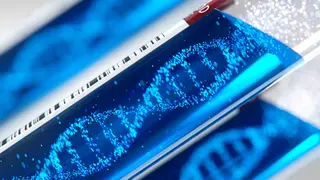
AtlasBase is developing DNA-based storage hardware that encodes digital information into synthetic DNA sequences within small capsules, with potential capacity reaching 50 PB per unit and longevity exceeding 1,000 years without power or cooling. The company's Thalia chip features 5.6 billion reaction sites, representing a significant advancement in DNA synthesis technology density. While the technology demonstrates considerable promise for long-term data preservation, specific details regarding performance speed, cost, and commercial availability remain undisclosed.
AtlasBase's DNA storage platform represents a fundamental shift in how data preservation might work at scale. The Thalia chip achieves its capacity through a hybrid approach: a silicon semiconductor layer controls millions of microscopic reaction sites where chemical processes synthesize DNA sequences. Each site receives electrical signals that determine which of the four DNA bases gets added during synthesis cycles, building encoded information molecule by molecule at unprecedented density.
The practical advantage lies in longevity and footprint. A single cartridge-sized unit could theoretically hold between 100 terabytes and 5 exabytes, with stored data remaining viable for over a millennium without power infrastructure. This contrasts sharply with conventional storage media, which degrade over decades and require continuous energy investment to maintain accessibility.
DNA storage technology could reshape data management for institutions managing massive information archives—universities, government agencies, and corporations with long-term compliance obligations. However, the absence of disclosed performance metrics, pricing, and launch timelines limits meaningful assessment of real-world impact. If the technology reaches commercial viability at reasonable cost, it may fundamentally alter strategies for historical data preservation, though traditional storage systems would likely coexist rather than disappear entirely.