Surprising Discovery: Cool Lava World Retains Atmospheric Layer
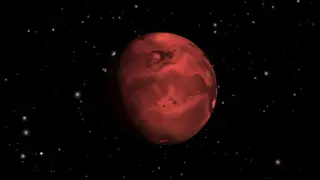
Using the James Webb Space Telescope, an international research team detected evidence of an atmosphere surrounding HD 3167 b, an Earth-sized lava world orbiting its star every 0.96 days at a distance of 154 light-years. This finding challenges previous assumptions that only the hottest lava planets retain atmospheres, as cooler variants were thought to be bare, airless rocks. The detection was made by observing the exoplanet's secondary eclipse, revealing that atmospheric retention mechanisms on lava worlds may be more complex than previously understood.
The James Webb Space Telescope's observation of HD 3167 b's secondary eclipse—the moment when the exoplanet passes behind its host star—revealed surface temperatures significantly lower than models had predicted. This cooler-than-expected thermal profile suggests heat generated on the planet's sun-facing side may be redistributed across its tidally locked surface to the night side, a mechanism that could enable atmospheric retention even at moderate temperatures.
The discovery holds implications for understanding planetary evolution on early Earth. Lead researcher Brandon Park Coy notes that our planet likely experienced a similar magma ocean stage billions of years ago during its formation. By studying how lava worlds like HD 3167 b maintain and circulate their atmospheres, scientists gain indirect insight into the extreme conditions that characterized Earth's first few million years of existence.
While lava worlds remain inhospitable to life as currently understood, this finding may reshape how scientists model planetary atmospheres and surface-atmosphere interactions across diverse exoplanet types. The research could influence future telescope observations and atmospheric detection strategies for other tidally locked worlds, potentially affecting how astronomers prioritize exoplanet candidates for study. Additionally, the results may refine models used in planetary formation theory, with possible downstream applications to how we understand habitability on newly discovered worlds.