Mars Rover Curiosity Discovers Unusual Mineral Formations in Changing Rock Composition
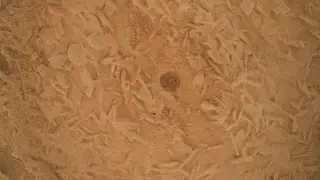
The Curiosity rover encountered an unexpected shift in rock texture, discovering numerous disc-shaped mineral formations on the Martian surface that differ from previously observed layered bedrock. Scientists hypothesize the features may represent crystalline minerals that grew into distinctive shapes or fragments from a harder rock layer, similar to formations seen in Earth rocks where minerals precipitated from evaporating fluids. The rover's MAHLI camera and other instruments are being used to analyze the morphological details of these formations to better understand Martian geology.
The Curiosity rover has been traversing Mars for over a decade, and this discovery marks a notable shift in the geological features it has encountered. The disc-shaped mineral formations, measuring just 3-4 millimeters across, were found after the rover moved into a new terrain type, transitioning from the finely layered bedrock structures that dominated its recent observations. This change in rock composition prompted scientists to deploy multiple analytical instruments to understand the minerals' origins and structure.
To identify the specific mineral composition of these formations, the rover's team planned a drilling campaign—the first since traveling over a kilometer from their previous drill site. The characterization process involves several onboard instruments, including spectroscopy and X-ray diffraction analysis, which will provide definitive mineralogical data. These findings could inform understanding of Mars's ancient hydrological history and the environmental conditions that shaped its surface geology.
Understanding Mars's mineralogy and geological history has implications for future human exploration and the search for evidence of past microbial life. Discoveries about mineral formation processes and water interactions advance planetary science broadly and refine models of how rocky planets evolve. While immediate practical applications remain limited, such findings contribute to long-term assessments of Mars's habitability and resource availability, potentially informing decisions about sustained human missions decades ahead.